For years, creatine has been taken by athletes and bodybuilders to enhance muscular growth and improve athletic performance, but now, that paradigm has begun to shift. New research finds it’s not just for athletes, and it’s not just for performance. It’s also good for bone health, limiting strength loss as we age and cognition too, especially in aging populations.
Let’s look at what creatine actually is; then let’s unpack the evidence associated with it. I think you may be surprised.
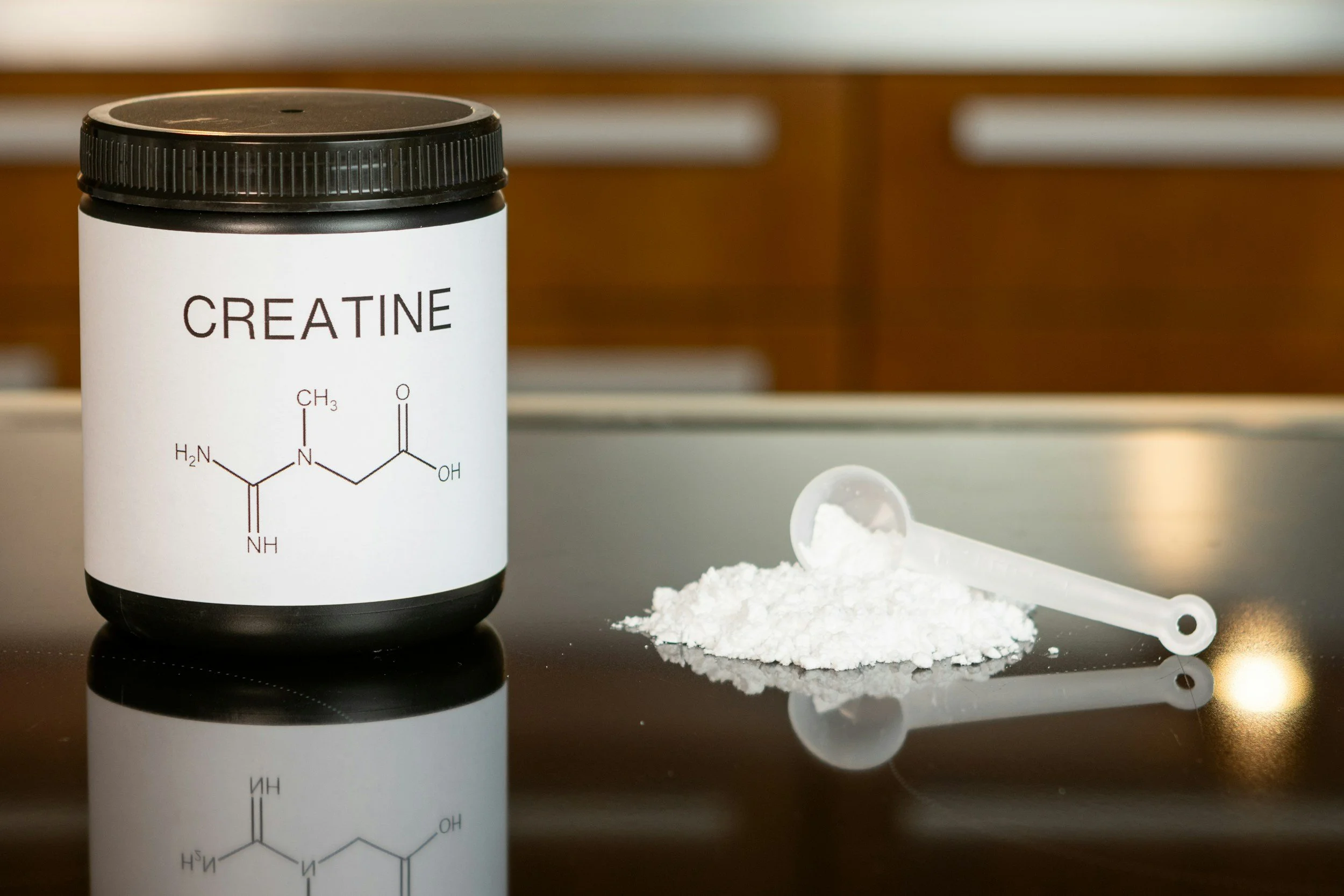
Creatine is a naturally occurring compound found in the body. Yes, we make it from amino acids provided to us by our diet. For those who want to know, it’s primarily from the amino acids arginine, glycine and methionine, which you can get from plant protein or meat, fish, poultry and dairy. But vegan diets supply little to none, so vegans beware: you may be deficient in it. Creatine plays an essential role in how our cells produce and use energy. That said, we are going to be hearing a lot more about creatine and how not only athletes can benefit from it, but elderly people too. Exciting stuff.
In our body, we take the aforementioned amino acids and mix them in the kidneys and pancreas. Then we transport them to the liver, where we complete the manufacturing process and release creatine into the blood. We can even store it! In fact, most of it is stored in the skeletal muscle. Great if you’re young, but that’s a problem for the elderly because we have been losing muscle at a rate of 5-7 pounds per decade starting at 35 years of age. About 95% of our creatine is stored in the muscle; the remaining 5% is stored in high-demand tissues such as the heart, brain and other tissues needing support.
When we are young, we naturally make about 1-2 grams of creatine a day; however, by the age of 50, that production has dropped to a maximum of 1 gram, and it declines quickly after that as we age. That’s a problem because creatine supports energy production in the body; it literally helps to regenerate ATP, which is used by every cell in the body to function.
The thing is, as we age and as we lose muscle (sarcopenia), we also lose mitochondria, which is where we make our ATP. If you guessed that the mitochondria are in the muscle, you would be half correct. Almost every cell in the human body has mitochondria, but muscle is especially abundant in them.
When we lose muscle, it reduces the amount of energy we are capable of producing, and it reduces our physical capacity to perform work; we get weaker. The loss of muscle not only robs you of your ability to perform daily tasks, but it also reduces your mitochondrial population, and that reduces your ability to produce and use energy. This is important because the mitochondria are also involved as a last-chance resource for the body to neutralize free radicals. Thus, the more you lose, the greater the chance of free radical damage. Add that to a poor diet, where even more free radicals are formed, and you have a recipe for mitochondrial dysfunction, the main disease of aging. This condition increases your chances of migraines, strokes and cognitive decline, as well as extreme fatigue, weakness, heart arrhythmias and organ failure.
So, getting older reduces your mitochondrial base, and sarcopenia (muscle loss with age) reduces your muscle mass, mostly your fast-twitch, reactionary muscle. This contributes to a reduction in creatine production. Other factors which play a part include lower physical activity, vegan diets and low meat intake. All this adds up to a loss of mobility and independence as we age while at the same time increasing fall risk, fracture risk and slowing recovery from injuries.
The research is comprehensive when it comes to aging. Maintaining muscle strength and independent function is vital to longevity. Lose that strength, and you lose your independence and you lose years off your life expectancy.
Many advertisers would tell you to take a protein drink to help, but to date, there’s no real evidence that a protein drink would do anything except provide some calories and nutrition. What is clear is that creatine supports energy production in muscle, and this, with whole-body vibration strength training, might help address the inevitable changes associated with aging.
Studies have been very clear that creatine monohydrate, when combined with strength training, will increase lean mass, improve strength and enhance physical performance. Not only athletic performance, but regular activities of daily living too.
Since the greatest loss of muscle in sarcopenia occurs in fast-twitch muscle, it is necessary to stimulate that muscle to prevent its loss. Studies show a minimum resistance of 65% of the 1-rep-max to accomplish this, but whole-body vibration automatically stimulates the fast-twitch fibers, negating the need to guess resistance.
Interestingly, whole-body vibration and creatine both stimulate bone growth because both increase muscle strength, which in turn stimulates bone development. Some studies also suggest that creatine may reduce the markers of bone breakdown too, which supports remineralization of bone.
Women in particular have concerns about taking creatine, as well as lifting weights, fearing either will cause them to bulk. However, these fears are unfounded. Most men have a hard time attaining bulk, even with heavy weights. Women produce less testosterone and so have an even lower opportunity. Anyone can improve strength, however, and a stronger muscle pulling on a bone produces stronger bones.
For women, bone loss accelerates after menopause as estrogen levels decline, along with muscle loss, all of which contribute to osteoporosis risk. Emerging evidence suggests that supplementing with 3-5 grams a day of creatine, with vitamin D and K2, helps reduce that loss. If you add strength training to that, it improves bone scores.
For both men and women, creatine supplementation may also support cognitive function. Yep, bet you didn’t see that coming? Research actually supports using creatine to improve brain function, especially for tasks requiring high mental energy, working memory, and reasoning. How? Well, same way it helps muscle. Creatine helps to maintain ATP production. ATP is your most vital source of energy. It surprisingly is most helpful during periods of mental fatigue, sleep deprivation or when you have been on a vegetarian diet for years. That’s because the brain consumes roughly 20% of your total energy needs. The creatine helps buffer and regenerate the ATP in neural tissue, which supports cellular resilience.
The next big question is whether it’s safe to take. Most medical doctors freak a little because your creatinine tends to go up a little. Now, creatinine is used as a marker for measuring normal waste products from the body. Creatinine is formed from the breakdown of creatine and phosphocreatine, which supply energy to muscle. So, creatinine is made from creatine before the kidneys eliminate it. Medical doctors use serum creatinine alongside age, sex and body size to calculate the estimated glomerular filtration rate (eGFR) as a check to see how well your kidneys filter waste. Since you are taking an exogenous dose of creatine, you might expect your levels to go up a little, not because your kidneys are showing dysfunction, but because your body is simply converting the excess into a product to eliminate it.
Creatine is one of the most studied supplements in the world, and studies consistently show that it’s safe when you take the recommended doses. Now, if you have a kidney issue, you should exercise concern and precaution before taking creatine. A conversation with your medical practitioner would be in order.
For everyone else, a standard dose of 3-5 grams per day is safe, and there is no need to undergo a loading phase; that is a pure marketing myth to increase consumption.
Some people are concerned with timing for improved uptake, and certainly consuming it post-workout does slightly improve absorption, especially if it’s taken with a protein or carbohydrate. However, being consistent is far more important than timing. Also, performing resistance training obviously enhances the strength effect and helps you to hold on to your muscle far better.