
Your Balance Isn't Just in Your Ears. It's in Your Muscles. How to Prevent the Fall.
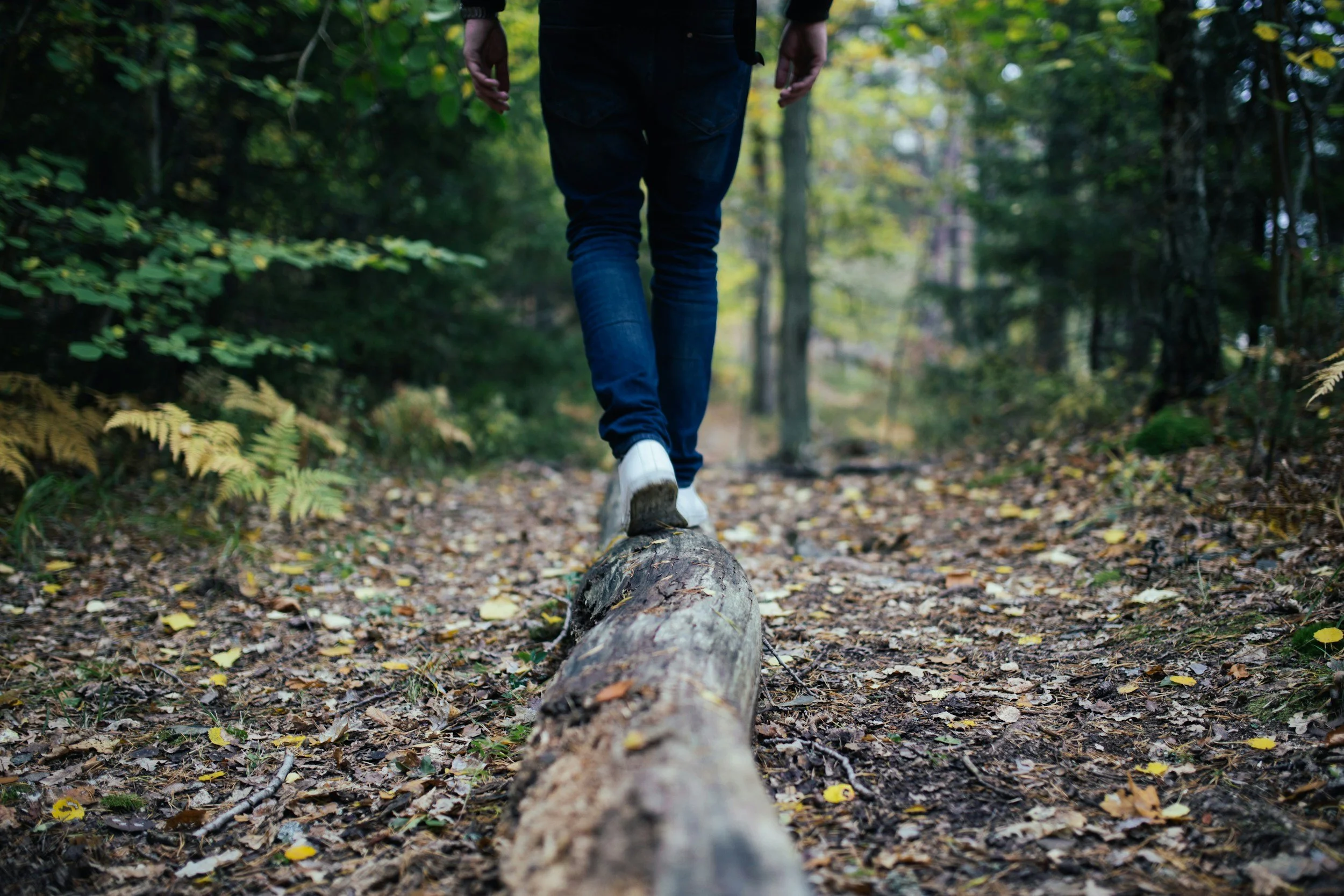
If there were a solid prevention strategy for reducing fall risk, would you do it? Would you do it if you knew that fall risk also predicts longevity and overall health?
Falls are not a new issue, especially in the elderly, but the condition develops over years. It’s insidious in onset, and by the time you figure out it’s a problem, you are usually contemplating recovery from your first fall. Falls, of course, are not limited only to the elderly. The World Health Organization reports them as the second leading cause of unintentional injury deaths worldwide.
Many organizations will tell you that fall prevention is a multifaceted issue requiring a tailored and organized approach to fix it. It’s not wrong, but balance issues actually begin in the early 50s, very often due to medical drug side effects, sensory changes, and the loss of strength.
Bet you didn’t see that coming, huh? But nonetheless, as you lose strength, you also affect balance. To be clear, the loss of strength began in your mid-30s. Once the metabolism slowed down from growth and maturation, and once you got more focused on family, work, and other things, you gradually began losing strength. It’s called sarcopenia, and it will take 5-7 pounds of muscle per decade of life, accelerating after 50.
Inside your muscles are lots and lots of receptors that help you stay balanced. They check your posture against gravity, and they tell your brain to correct any issues you might have in positioning. These receptors, called mechanoreceptors, help your body catch, stabilize, or correct your positioning as you move through your day. However, since they are found inside the muscles and tendons, losing strength because of inactivity ultimately affects your overall ability to stay upright. Literally, your strength and balance are intertwined because they ultimately control your body’s center of gravity, and that balance requires your muscles to generate physical force the exact moment you start to tip or sway.
Now, you have several types of muscle in your body. We can look at it in a basic light as slow-twitch and fast-twitch, but each category has subgroups, which on the last count numbered at least 17.
Sarcopenia (loss of muscle with age) tends to take your fast-twitch muscle and preserve the slow-twitch, which is a problem because the fast-twitch generates the speed you need to react to those little sways and tips and ultimately helps you prevent that fall, or not.
Walking, gardening, running, and any cardiovascular exercise will not stimulate the fast-twitch muscle. Strength training is the only modality that will.
Bottom line, without a foundation of strength, you cannot catch, stabilize, and correct your posture, and that increases your risk of falling.
Strength is not only physical; it is reactive too, and that reactive strength requires a rapid correction, which slow-twitch muscles cannot provide. Think of it like you are losing your balance by slipping on ice. Your body must rely on a rapid corrective action, a reflex. Your leg muscles must instantly tense and produce enough force to keep your body upright and correct your position. If your muscles are too weak, you cannot generate the power and speed to recover, and you will fall.
Muscle, however, does more than just move you or correct your position. Remember, it is filled with biological structures that provide energy, feedback, and balance. To keep those structures, you have to keep your muscles, and only strength training can do that.
Not only that, but your core muscles act as a structural support for every movement you make. A strong core includes the abdominals and back muscles but also includes the deep muscles surrounding your spine too. If your spine is strong, your core and your posture are also strong, and that prevents you from swaying off balance.
Many falls are more complex than just a simple trip. In the elderly, they can be caused by a combination of factors. These factors include weakness, muscle imbalances, gait instability, urinary incontinence and infection, drug side effects, dizziness, vision loss, and loss of range of motion (flexibility). Ultimately, improving strength improves balance and proprioception, which reduces fall risk, but only if you are getting to the fast-twitch muscles.
How can we prevent falls and improve balance? Well, combining strength training with balance training is the best way. A meta-analysis stated that exercise alone reduces the rate of falls by 23% compared to control groups. If we add functional training and balance, then the rate of falls reduces by 24% in some studies, 24-28% in others, and yet more in others. Most studies find walking alone ineffective, and resistance-only training has mixed results.
Balance programs such as Tai Chi yield similar but lower results at 19-23%. Clearly, the best result is to combine strength with balance on a whole-body vibration platform. But there’s more to it than that; of course there is, right?
Meta-regression studies tell us a different story. So, a meta-regression is a statistical technique used in a Meta-Analysis to examine why different studies have different results. It treats each study as a single data point. So, it tests study features, like patient age, dosage, or study design, then looks at change overall. When we analyze it this way, we find that a simple 6-week or 10-week study might not effectively change balance, but longer-term adherence to balance programs does. The magic number appears to be a minimum dose of 50 hours or more, with at least 3 hours per week, or three 30-minute sessions. This, of course, is done with balance, functional movement, resistance training, and whole-body vibration. Using this approach, fall reduction is 42%.
The World Falls Guidelines recommend 3 sessions per week for a minimum of 12 weeks, but keep in mind that strength, fitness, and balance are perishable. The American Geriatrics Society, along with the World Falls Guidelines, recommends that older adults engage in balance-centered programs that incorporate balance, gait, and strength exercises that are functional in nature. This would require either free weights, cable-based programs, or whole-body vibration. Set range-of-motion equipment cannot provide improvements in balance. Furthermore, the organizations require programs that are progressive in nature and supervised, all of which we do at ReVibe.
Programs that are run by professionals show larger positive effects than those delivered by trained non-professionals, such as weekend-degreed personal trainers (42% versus 18%).
The question is, why is whole-body vibration better for you? Well, apart from the fact that I see it every day, whole-body vibration improves both strength and balance. It does this because those rapid oscillating movements stimulate the nervous system and all the muscles. Standing on the platform causes your muscles to contract and relax dozens of times per second, recruiting more muscle, developing strength, building stronger bones, and developing your balance and reactionary ability. The increase in strength reduces fall risk by 42%, but the vibration adds an additional 24% improvement to that number, clearly reducing the risk of falls.
My closing point is simple. Many seniors have balance, proprioception, and strength issues; few are willing to do resistance training to overcome those issues, and even fewer understand what to do if they decide they can lift weights. That’s the beauty of whole-body vibration. Beginners can just stand on the plate to begin with, then slowly proceed into more complex movement patterns, patterns that are functional and safe. Since many seniors want to hold onto something while they move, the Power Plate whole-body machine allows them to do that. This makes up for balance and proprioception issues until they improve enough to do it with less stability.
Make no mistake, strength is the fleeting currency of age, and fast-twitch muscle is the most lost commodity. Once that muscle is lost, it is harder to be returned. Thus, whole-body vibration training, which recruits fast-twitch muscles, coordinates movement, and improves balance, is an important activity that all seniors should undertake.
The human body, once it reaches adult age, is in constant decline; age and inactivity accelerate that decline. Health is perishable; strength is the only currency you have to withdraw. Start building that account now; your independence depends on it.